
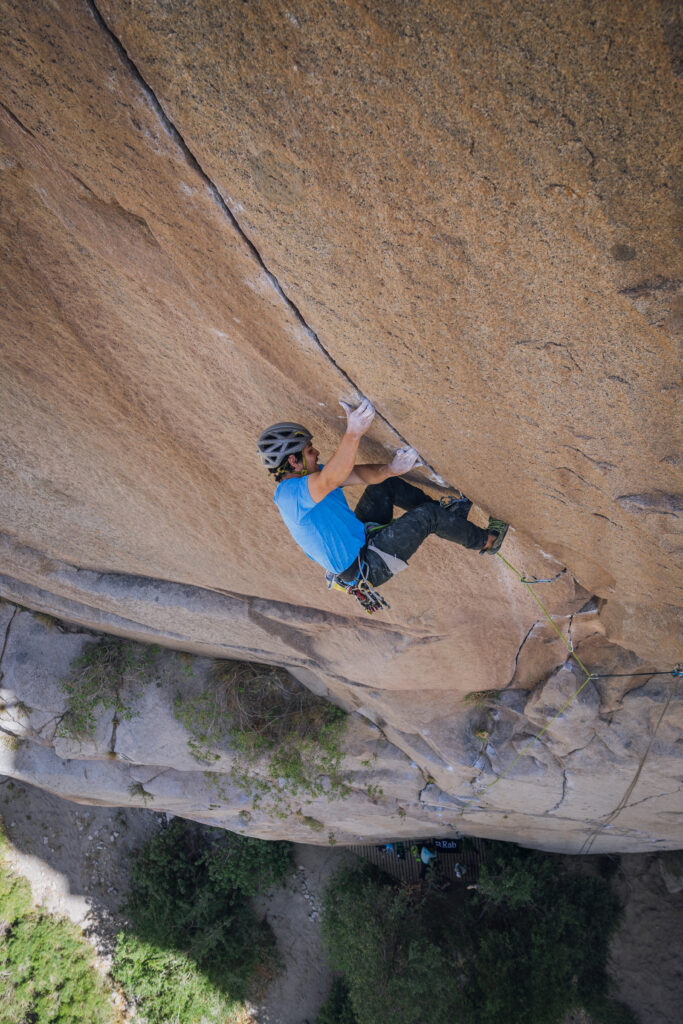
In recent years, taglines have become increasingly common in multi-pitch climbing, big wall, and alpinism. You've probably seen teams using a very thin cord alongside their main rope and wondered exactly what it is.
The short answer: a tagline is a very useful tool... but also a tool that requires judgment, technique, and experience to use correctly.
In this article we explain what a tagline is, what it's used for, its main advantages and risks, and which models are currently available on the market — based on modern standards and practical field experience.
What is a tagline?
A tagline is a small-diameter auxiliary cord, typically between 5 and 7 mm, used primarily to retrieve the main rope after a rappel or to haul gear on walls.
Unlike a dynamic climbing rope, a tagline is not designed to absorb significant falls. Its primary function is to reduce weight and increase logistical efficiency on long or technical routes.
In simple terms:
- You rappel on the main rope
- The tagline is used to retrieve the system
This allows full-length rappels without having to carry two thick dynamic ropes.
Is a tagline the same as a cordelette?
No.
Although they may look similar visually, a modern tagline and a traditional cordelette are not designed for the same purpose.
Many taglines use high-tech materials such as HMPE/Dyneema, aramid, or hybrid combinations, which allow them to achieve much higher strength ratings at a fraction of the weight.
For example:
| System | Approximate strength |
| 5 mm nylon cord | ~5–6 kN |
| 6 mm nylon cord | ~7–9 kN |
| 7 mm nylon cord | ~10–12 kN |
| Modern 6 mm tagline | ~12–15 kN |
Some models like the Petzl PUR Line or Mammut Glacier Cord have strength ratings close to or even higher than certain much thicker cords, but at a fraction of the weight and elongation.
However, that does NOT mean they are 'safer' for every situation.
The key difference is that:
- a tagline is designed for specific rappel, retrieval, and hauling systems
- a traditional cordelette is typically used for anchors, friction knots, or rope maneuvers
- neither replaces a dynamic rope for lead climbing
Names and terminology
Depending on the context, a tagline may go by different names:
- Tagline → most common term in rock and big wall climbing
- Pull cord → when used primarily to retrieve ropes on rappel
- Haul line / Haul cord → when used to haul packs or gear
- Rescue cord → in some alpine or glacier contexts
Terms often overlap between disciplines and regions.
Key differences vs. a dynamic rope
Although they may look similar, a tagline and a dynamic rope serve completely different functions.
A tagline:
- Has almost zero elongation
- Is much lighter
- Typically uses HMPE/Dyneema materials
- Is not designed to absorb dynamic falls
A dynamic rope:
- Is designed for lead climbing
- Absorbs energy in a fall
- Has greater diameter and weight
- Is certified for significant dynamic loads
⚠️ A tagline never replaces a dynamic rope for lead climbing.
| Characteristic | Tagline | Dynamic Rope |
| Elongation | < 2% (hyperstatic) | 10–35% |
| Diameter | 5–8 mm | 8.5–10.5 mm |
| Weight per meter | 20–40 g/m | 40–80 g/m |
| Material | Dyneema/HMPE + Polyester/Aramid | Nylon |
| Lead climbing use | PROHIBITED | Yes |
| Direct rappel | With advanced techniques | Yes, with standard device |
| Hauling use | Yes | Yes |
| Water absorption | almost none | depends on treatment |
| Price (60m) | $150–$470 USD | $100–$350 USD |
Main uses of the tagline
1. Long rappels
The most common use.
Allows rappelling the full length of the main rope. For example, with a 60 m rope you can descend the full 60 m instead of only 30 m — and instead of carrying a second dynamic rope, you carry a tagline which is much lighter.
This is very useful for:
- Multi-pitch
- Big wall
- Alpine terrain
- Long descents
2. Gear hauling
On long or difficult routes, the leader can climb without carrying a heavy pack, then haul it up using the tagline.
This greatly improves efficiency on:
- Big wall
- Multi-pitch
Materials and technologies
Most modern taglines use fibers such as:
HMPE / Dyneema
Very lightweight and extremely strong for its weight.
Advantages:
- Low water absorption
- Very lightweight
- High strength
Limitations:
- Very slippery
- Low melting point
- Requires extra attention with knots and rappel
Aramid / Technora
Some models blend aramid into the sheath to improve:
- Heat resistance
- Abrasion resistance
- Control during rappel
Popular market models
Currently the best-known models are:
Petzl RAD Line
One of the market benchmarks.Petzl – RADline 6mm
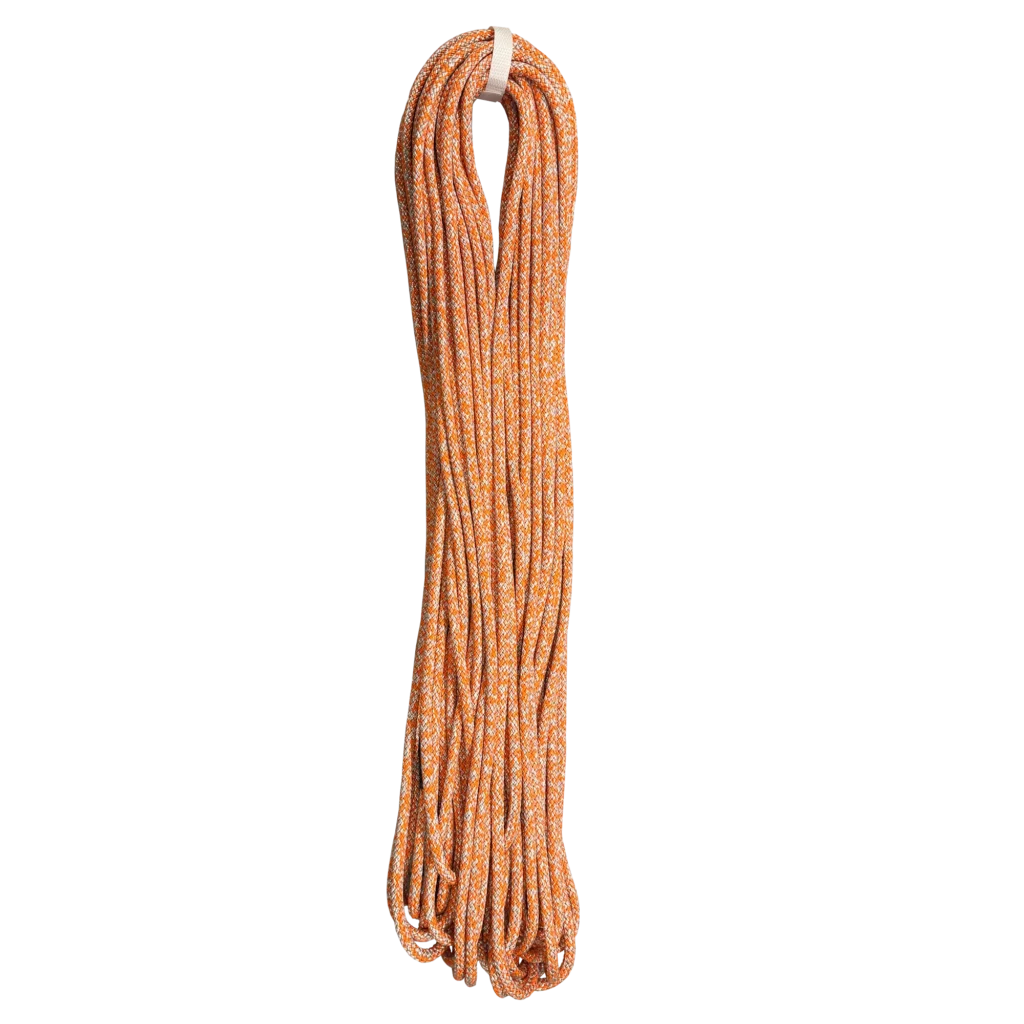
The market reference standard. RAD stands for Rescue And Descent. Originally designed for alpine skiers but widely adopted in rock climbing and alpinism.
- Reference price: ~$240 (30m) / ~$460 (60m) USD
- Diameter: 6 mm | Weight: 22 g/m | Strength: 12 kN
- Material: HMPE core + reinforced polyester/HMPE sheath
- Elongation: < 2% (hyperstatic)
- Certification: CE EN 564, UKCA
- Available lengths: 30 m and 60 m
- Compatible with: Petzl Tibloc, Micro Traxion, Nano Traxion
- The textured sheath improves grip when rappelling and for use with prusik knots
- Flexible and relatively easy to handle for a 6 mm cord
Petzl PUR Line
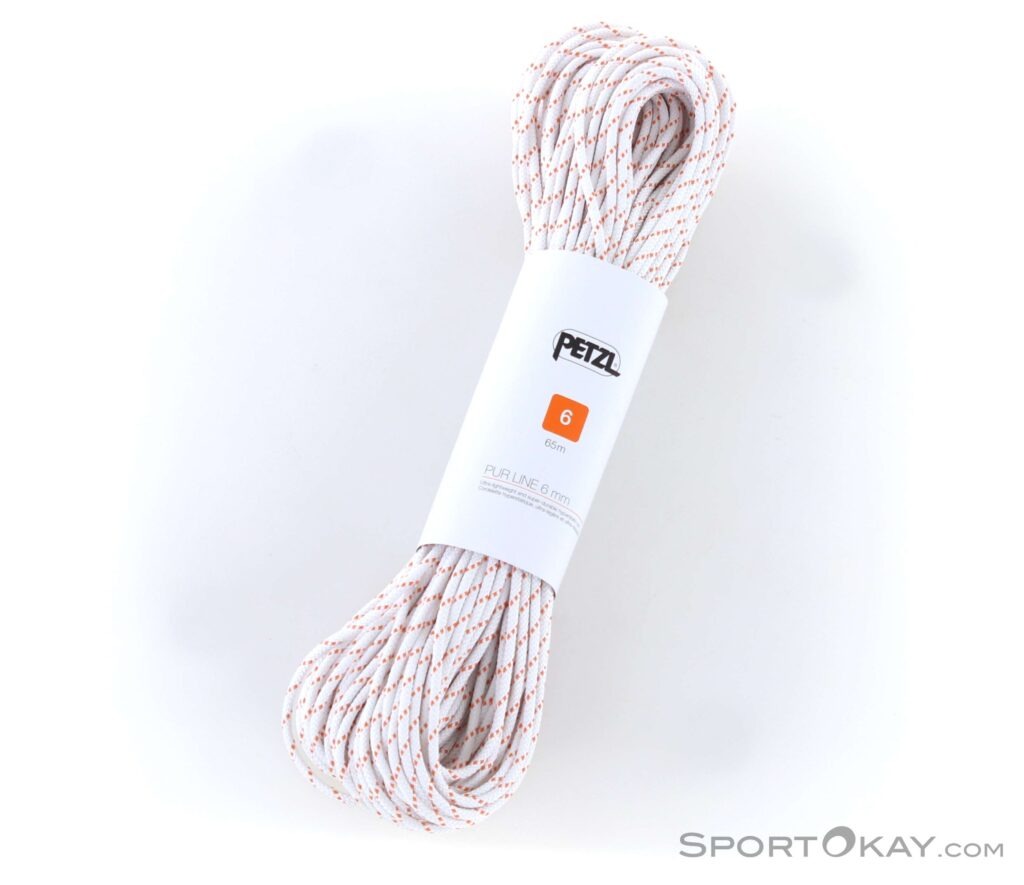
Petzl's most extreme and slippery version. PUR stands for 'PURe Dyneema,' as its sheath is almost 100% Dyneema.
- Diameter: 6 mm | Weight: 20 g/m | Strength: 15 kN
- Material: 100% Dyneema (core and sheath)
- Color: white
- Lighter than the RADline with higher tensile strength
- Extremely slippery
- Ideal as a pull cord: only for retrieving the main rope
- Petzl recommends using TWO stacked overhand knots when connecting it to the main rope, NOT the standard EDK
⚠ WARNING: The PURline is so slippery that conventional knots can slip. The EDK alone is not sufficient. Always use a double stacked overhand. Never rappel directly on it with a GriGri or standard ATC.
Mammut Glacier Cord
Main competitor to the RADline. Designed for glaciers and alpinism but widely adopted in rock climbing.
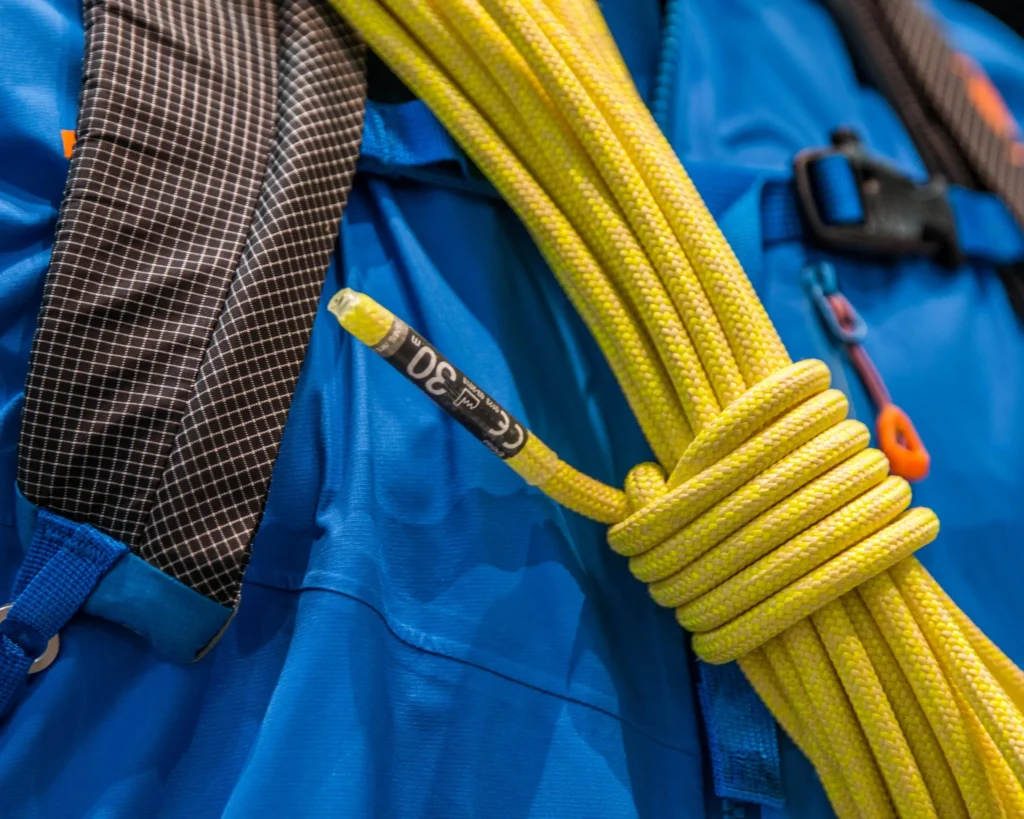
- Diameter: 6 mm | Weight: 25–27 g/m | Strength: 14 kN
- Material: 66% Dyneema + 34% Aramid (more robust sheath)
- Certification: CE EN 564, compatible with Petzl Tibloc, Micro Traxion
- DRY treatment included: better friction in wet conditions
- Comes with a stuff sack storage bag included
- Durable sheath: greater longevity on abrasive rock
- Reference price: ~$250–$485 USD (60m)
Edelrid Rap Line II
The most innovative tagline on the market: the only 6 mm with a fall rating. Edelrid designed it as a hybrid between static and dynamic.
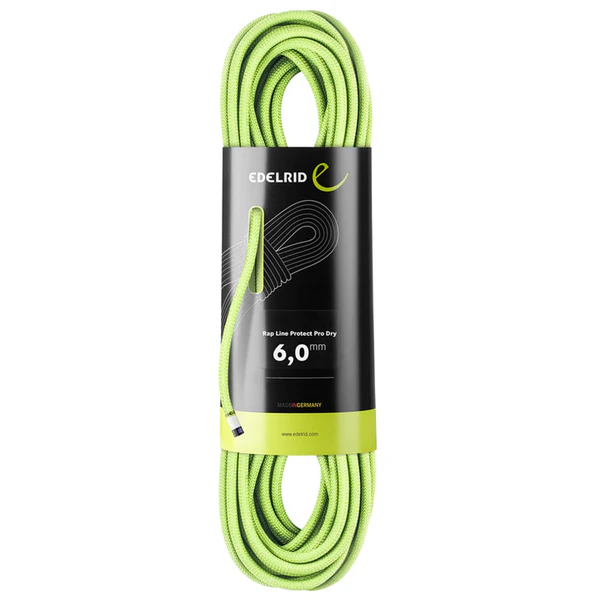
- Diameter: 6 mm | Weight: ~28 g/m
- Material: Aramid + Polyester sheath over mixed core
- ONLY tagline with a fall rating: passed 2 UIAA double rope fall tests
- Certification: EN 564
- The 'Protect' version has greater abrasion resistance
- More supple than the RADline but stiffer than the PURline: excellent balance
- Price: competitive with Petzl RADline
Not recommended for lead climbing, even though it passed 2 UIAA fall tests.
Risks and important warnings
The tagline is a good tool, but it is very important to understand that it carries real risks if used without proper training.
Some of the most common mistakes:
- Using it as the main climbing rope
- Incorrectly setting up the rappel system
- Using incorrect knots
- Mishandling the tagline and creating tangles
Dyneema-type materials are also extremely slippery and have a relatively low melting point compared to nylon.
Also, if you're using the tagline on rappels and your main rope gets stuck, you'll have a serious problem retrieving it — unlike if you were using a double rope system.
Conclusion
A tagline is not 'better' than a double rope. It's simply a different tool, with different advantages and limitations.
Used correctly, it can make a team move lighter and more efficiently. Used incorrectly, it can turn a simple rappel into a complex situation very quickly.
That's why, more important than buying a tagline, is learning when to use it, how to set it up correctly, and when it simply isn't worth using.
This content is for educational purposes and does not replace professional instruction in the field.
If you want to incorporate the tagline into your climbing safely, in our multi-pitch and self-rescue courses we practice it in real situations, with supervision and proper equipment.
 English
  Español