
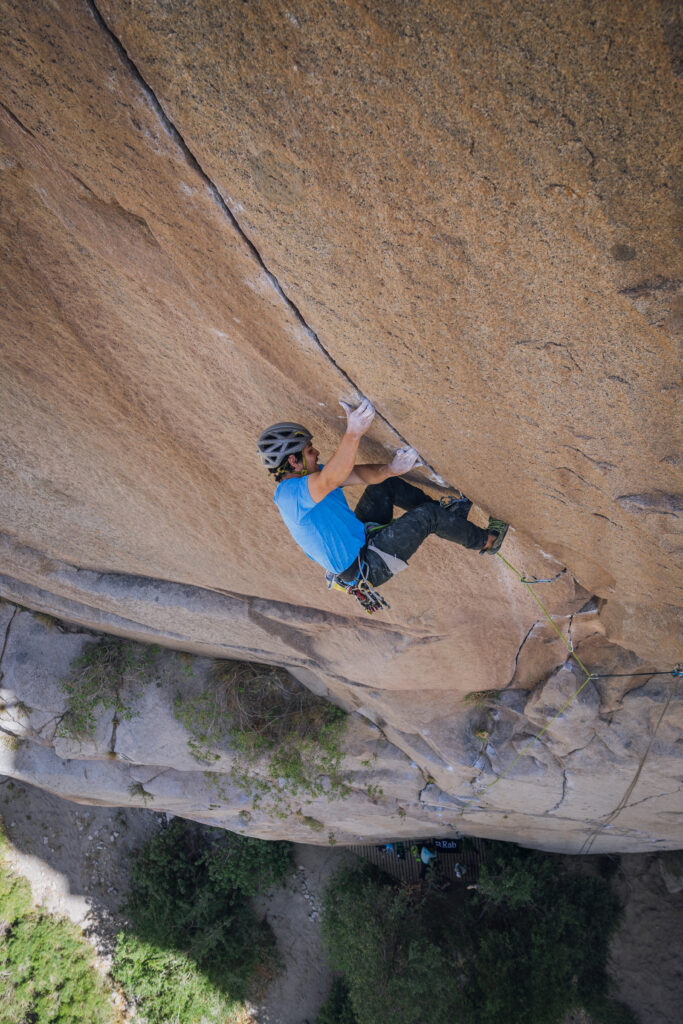
Chile is undoubtedly a world-class rock climbing destination that should be on every climber's bucket list. Throughout the country you'll find an endless variety of crags for sport climbing, trad, bouldering, and big wall. This article brings together information scattered across multiple sources so you can access it all in one place.
In this guide you'll find the best multi-pitch and big wall routes in central Chile, with topos, links, and recommendations to help you plan your climb.
Central Zone
Between Santiago, Cajón del Maipo, Valparaíso, and the O'Higgins region, there are endless crags for every climbing style, climbable year-round. Central Chile is known for its stable climate — despite heavy winter storms, lower-altitude areas stay climbable, and in summer, when heat is intense at lower elevations, it's the perfect time to head into the mountains for cooler temperatures. You'll also find an incredible variety of rock types: granite, basalt columns, tuff with pockets, conglomerate, and the andesite characteristic of the Andes.
Multi-pitch and big wall: here are some of the best venues for multi-pitch and big wall climbing in central Chile.
Cajón del maipo
Torrecillas
Torrecillas, located at El Manzano in Cajón del Maipo, is a multi-pitch climbing paradise. It offers over 300 routes on excellent-quality walls with diverse features including slabs, overhangs, tunnels, and cracks on compact, high-friction volcanic rock. Routes reach up to 350 meters. Torrecillas is known for its long runouts between bolts, making it intense and sometimes serious terrain — especially for those without adventure climbing experience. Caution and prior experience are strongly recommended; this is not a beginner venue. Access is via El Manzano, and it can be climbed year-round with seasonal trade-offs.
https://www.lacumbreonline.cl/blog/rutas-y-topos/guia-de-torrecillas-%E2%80%93-segunda-edicion
Some recommended routes:
- Centro de masa 5.10c
- Tripi para 2 inf + Hermanos Macana 5.10b
- 5120 + Dueños de nada 5.10c
- Los Chupa Cuarzo 5.11d A0
- Maipo libre 5.12a
Best season: Year-round, preferably fall (March–May)
Alfalfal
The Alfalfal sector is a true gem of climbing in Chile! Tucked into one of the Cajón del Maipo valleys, it's surrounded by impressive granite walls and is one of the best destinations for crack climbing on granite. Approach to the various routes is comfortable and close to the parking area. You'll find cracks of all sizes, overhangs, chimneys, slabs, and more — plus big wall routes of 8+ pitches.
To access this area you must obtain your permit at https://permisos.bienes.cl/
The team at Grandes Paredes Chile did excellent work producing the first digital guide for this traditional climbing area.
To access the digital guide, you must first complete this survey by Grandes Paredes Chile.
Some recommended routes:
- Águila mora 5.11
- Buenos días señor litre 5.12a
- El Cuete 5.10+
Las Melosas
Las Melosas is a great climbing area combining single-pitch sport routes, bouldering, and multi-pitch lines that reach the summit of Aguja Las Melosas, with some challenging grades.
ttps://rutag25.cl/wp-content/uploads/2020/06/Las-Melosas.pdf
Some recommended routes:
- El zorro y el minero 5.10c
- Código Bushido 5.12b
Best season: September to May
San Gabriel
A village in Cajón del Maipo named after its iconic Cerro San Gabriel. The mountain's south face holds a large granite wall with high-quality multi-pitch and single-pitch routes featuring incredible slabs and cracks. The majority of routes are trad or mixed.
El Jote – 400 m, 5.11-, 7 pitches
A sustained vertical climb following an excellent crack system with finger cracks, hand cracks, fist cracks, chimneys, offwidths, and roofs. One of the most classic big wall routes in central Chile.
You can find more information about this route at this link
And here you can get a feel for one of the iconic pitches on this great wall — the 4th pitch of El Jote
https://www.instagram.com/reel/C4_p5_0J_sR
Colombianos – 450 m, 5.10a, 10 pitches
One of the most classic and accessible big wall routes in central Chile. Colombianos is a vertical adventure where you'll apply your route-finding ability and crack technique.
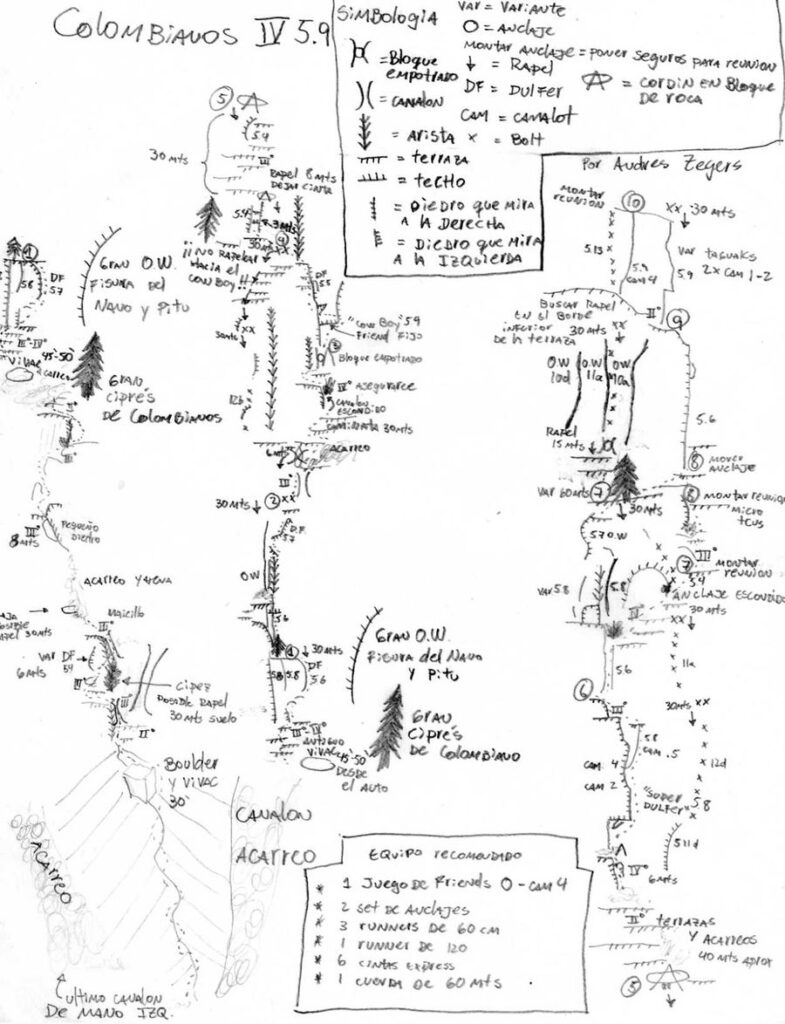
At this link you can find more information about the route and its approach
https://www.wikiexplora.com/Colombianos,_Cerro_San_Gabriel
Best season: December to April
Punta Zanzi
The legendary Punta Zanzi is a massive wall that stops every climber in their tracks — its sheer verticality and scale are hard to ignore. It has three main faces: Hitchcock, Contrafuerte, and Punta Zanzi itself. Across these three walls you'll find a wide variety of routes at different grades with excellent crack systems. High experience and extreme care on the scrambles between walls are required.
Placa Verde
One of the classic walls at Lo Valdés. Its most traveled route is Los Miserables — 400 m, 5.11a, 10 pitches. Other routes include Maletín de gasfiter and others.
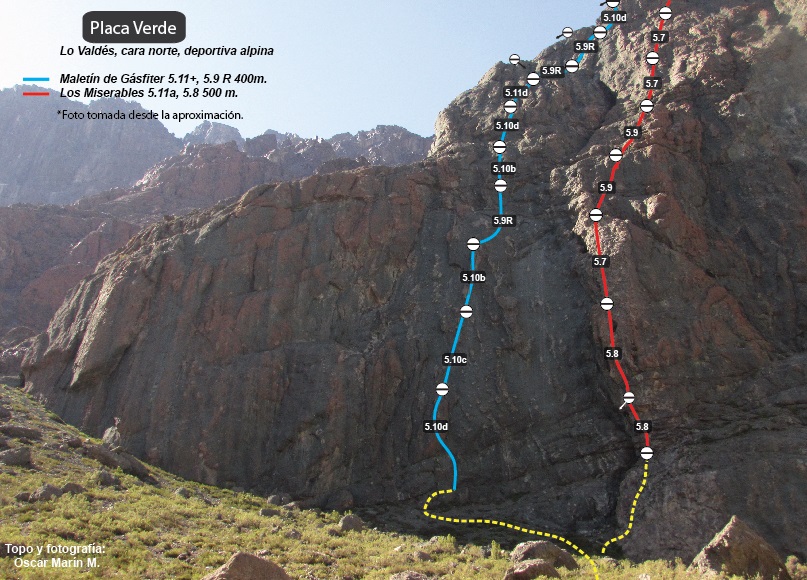
http://www.aruficax.cl/outdoors/miserables.pdf
https://www.wikiexplora.com/Placa_Verde:_Los_Miserables
Placa Roja
Filo Norte (North Ridge)
A highly scenic route with incredible panoramic views of the valley and surrounding peaks. It is a moderate-grade climb and can be descended by rappelling the ridge or via Marea Roja.
https://www.wikiexplora.com/Placa_Roja
Video showing the impressive Placa Roja wall
https://www.instagram.com/reel/Cz4hOdSuOHZ
Marea Roja
A high-quality, sustained route. Well-protected throughout, characterized by technical slab moves on the most vertical section of the wall.
https://www.wikiexplora.com/Placa_Roja:_Marea_Roja
https://www.mountainproject.com/route/114275264/marea-roja
Valle Las Arenas
Pared Fondo Marino
A vertical wall of sedimentary rock located at the valley entrance. As you climb, you encounter marine fossils thousands of years old embedded in the rock. The wall's verticality and views to the surrounding peaks are outstanding.
The approach to the wall takes approximately 1 hour from the former Alto Maipo site.
Nautilus
- 220 m, 5.10c mixed, 6 pitches
- Rack: slings, runners, single rack from .1 to 4
- First ascent: Nacho Morales, Pepe Edwards
El Gran Diedro del Mai
- 200 m, Trad, 5.9, 6 pitches
- Rack: runners, double rack
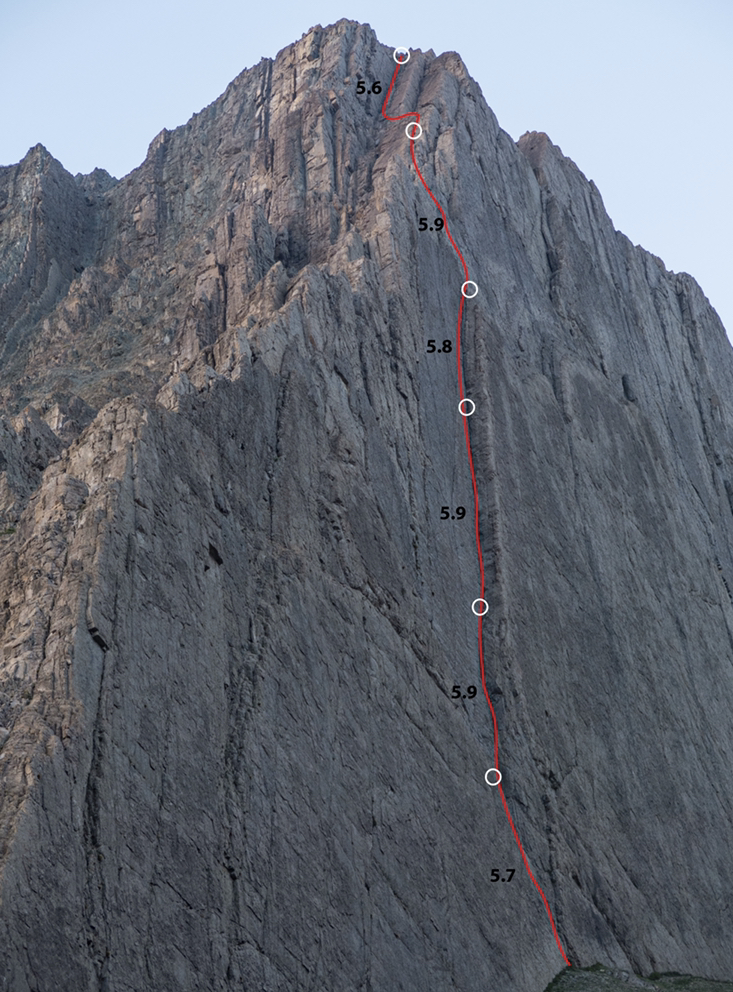
Photo by Gabino Reginago
Cerro Arenas
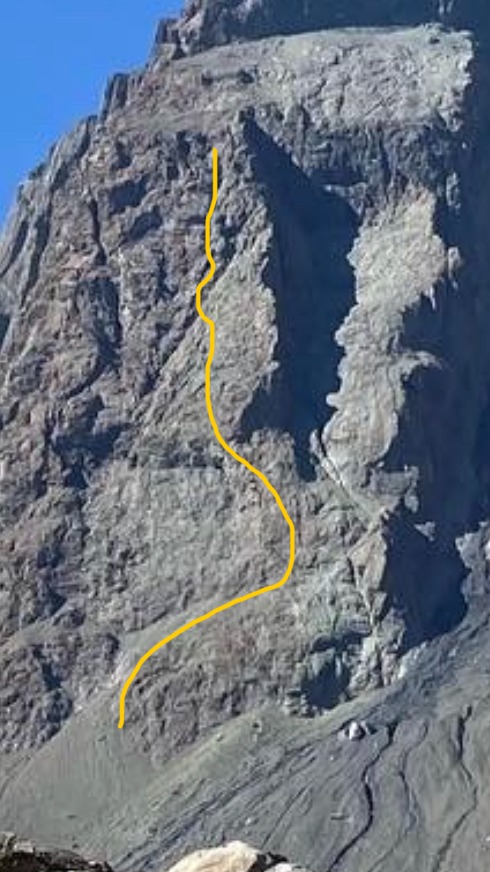
Cerro Arenas is one of the most iconic peaks in the area — its imposing south face demands to be climbed. It's a full adventure combining commitment, route-finding, and some loose rock. Once you're on the wall, the best option is to push for the summit and descend via the normal walking route.
Here is a topo of the peak
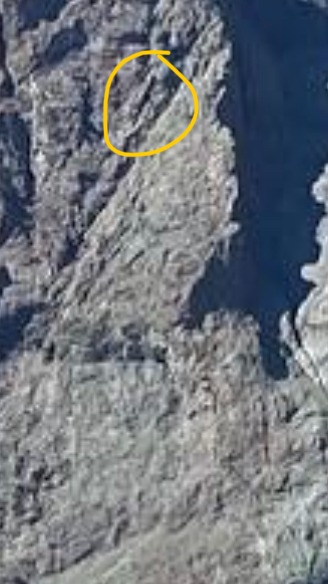
The scramble begins by walking right across the scree until you find a slab that leads toward 'the rock arm' connecting to 'the great triangle.' On that rock arm, traverse left toward a chimney with a slightly yellowish block. Make delicate moves over small ledges to reach an airy leftward step (approximately 5th class — easy but exposed). The scramble then becomes straightforward and obvious; continue upward, gradually trending left toward a long chimney that defines the cut of this 'triangle.' Near the chimney, look for a pillar on the far side (left of the main chimney) forming a small chimney with slightly loose rock that goes fine. After that small chimney, follow the obvious line to the upper snowfield. Allow 4–6 hours from the start of the scramble.
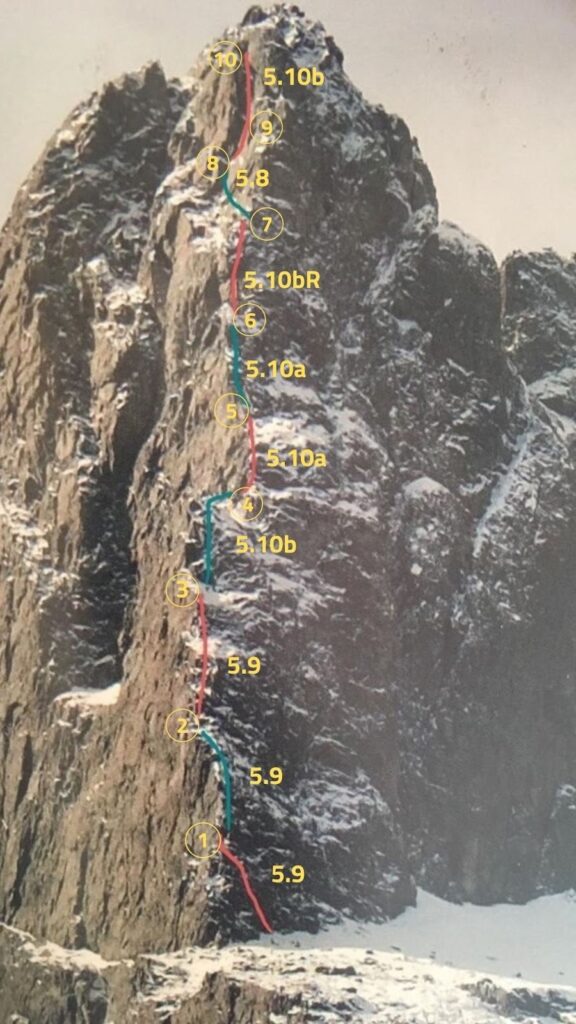
Pitch 1: Climb an obvious chimney to an easy slab.
Pitch 2: Follows the south-facing wall. There is a variant via the west face in a crack that starts as fingers and widens to hands — the variant increases the grade to approximately 5.10c.
Pitch 3: Head straight up along the most obvious line.
Pitch 4: Climb over loose blocks to a hand crack, then follow a fist crack exiting through a corner to the left. At the top of the corner, build an anchor on the left.
Pitch 5: Mount a block to the left, then follow a slab that lays back. There is a piton to the right of the slab.
Pitch 6: Follow the right side of the ridge to a block with a rope ring where you can build the anchor.
Pitch 7: Climb an unprotected slab for approximately 20–30 meters — no further protection until the anchor. The climbing is easy but serious.
Pitch 8: Easy traverse to the left; build anchor in a hand crack on the slab.
Pitch 9: Begins with a hand crack narrowing to fingers, then mount blocks that appear loose. Ends below an overhanging chimney.
Pitch 10: Climb the overhanging chimney, then mount a corner to the left. The route ends here — walk to the summit from this point.
To climb this wall you must be able to navigate the route well, as it is easy to get lost. This topo does not guarantee you'll follow the correct line — significant experience and careful planning are essential.
 English
  Español