
Multi-pitch climbing is one of the disciplines that truly tests you — technically, physically, and mentally. To enjoy a multi-pitch safely, good planning is essential. Here we share some general tips to help you plan your own multi-pitch outing — aimed at people who already have the skills to climb multi-pitch.
Route Information
Before heading out, gather information about the route you want to climb. Do this from the comfort of your home.
This is one of the most important steps — it tells you whether you're ready for the route, when to go, and what conditions to expect.
The key information we recommend gathering is:
Access:
It's very important to know where the route is located. In Chile, most walls have private access requiring a permit, entry fee, or specific knowledge of how to enter. Sometimes access is completely closed — by the community, the landowner, or the park. Keep this in mind before you go.
Key Questions
- Where is the route?
- Is a permit required for access?
- Is access currently open?
Approach
The approach is the trail to the base of the route. It can range from a simple trail walk to crossing glaciers, scrambling exposed sections, or hiking for more than a day. Know how long the approach takes and how long the descent takes.
The approach type and length tells you what gear to bring, how much food and water you need, and whether you're prepared. Are we ready for an exposed scramble? Can we hike 'x' km with a pack? Do we have the knowledge and gear for glacier crossings?
Key Questions
- How many km is the approach?
- How long does it take to reach the base of the route?
- Does the approach involve scrambling, rappelling, river crossings, glaciers, etc?
- Is there water on the approach?
Difficulty
It's important to know the route's grade and whether it's sport, trad, or mixed. This helps identify whether your team has the physical and technical capacity for the route, and how to divide pitches — for example, the stronger climber takes the harder pitches.
It's also important to know the area's style. Some sectors like Torrecillas have a runout style (gear placements far apart) — be mentally prepared for those pitches.
Key Questions
- What grade am I climbing?
- Is the route sport, trad, or mixed?
- Do I have the skills needed for this route?
- What grade does my team climb?
- Am I comfortable climbing runout pitches?
- How do we divide the pitches with my partner?
Number and Length of Pitches
The number of pitches determines how long the route takes and what rope setup to bring. Know the pitch lengths and whether you rappel the same line — this determines whether you need 1 or 2 ropes and what length. Consider whether you'll rappel the route, walk off, or rappel a different line when choosing your rope setup.
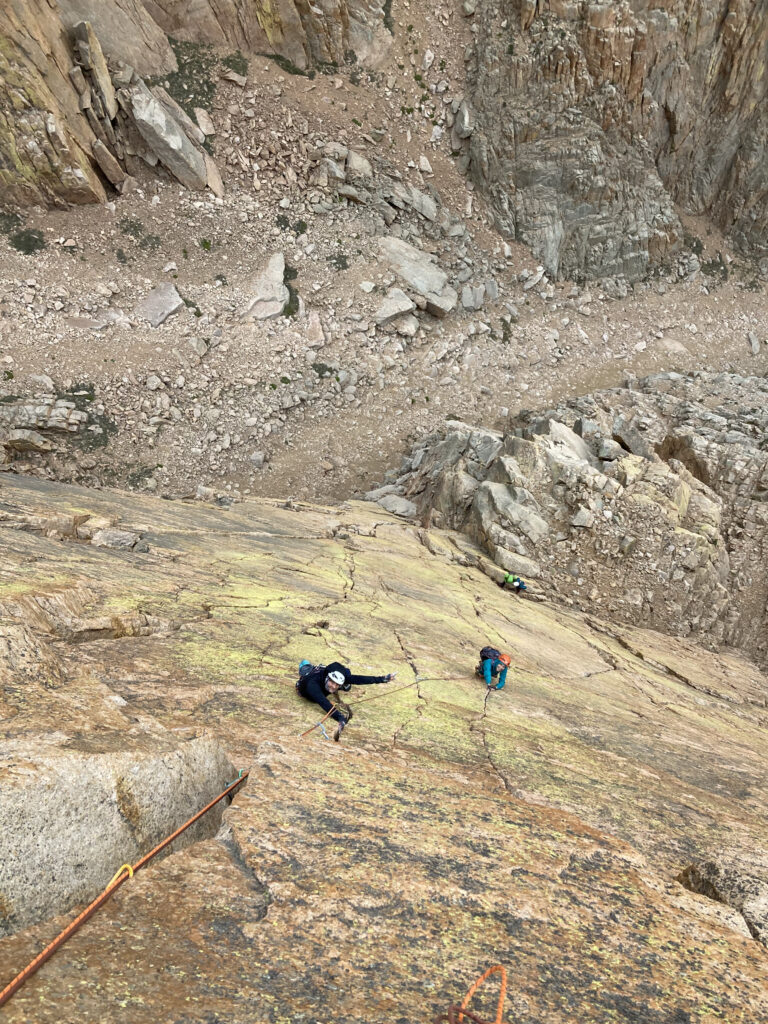
Based on the pitch count you can estimate your time on the route — for example, 40 minutes per team on 5.10 pitches, about 1 hour on 5.11 pitches. Track this across different multi-pitches to build accurate time estimates.
Key Questions
- How long are the pitches?
- What rope length do I need for this route?
- How long is my team taking per pitch?
Required Gear
Route topos often include a recommended rack — the minimum gear needed. It's not a universal rule, so each team decides whether to bring more based on their strategy. An example rack in a topo might look like:
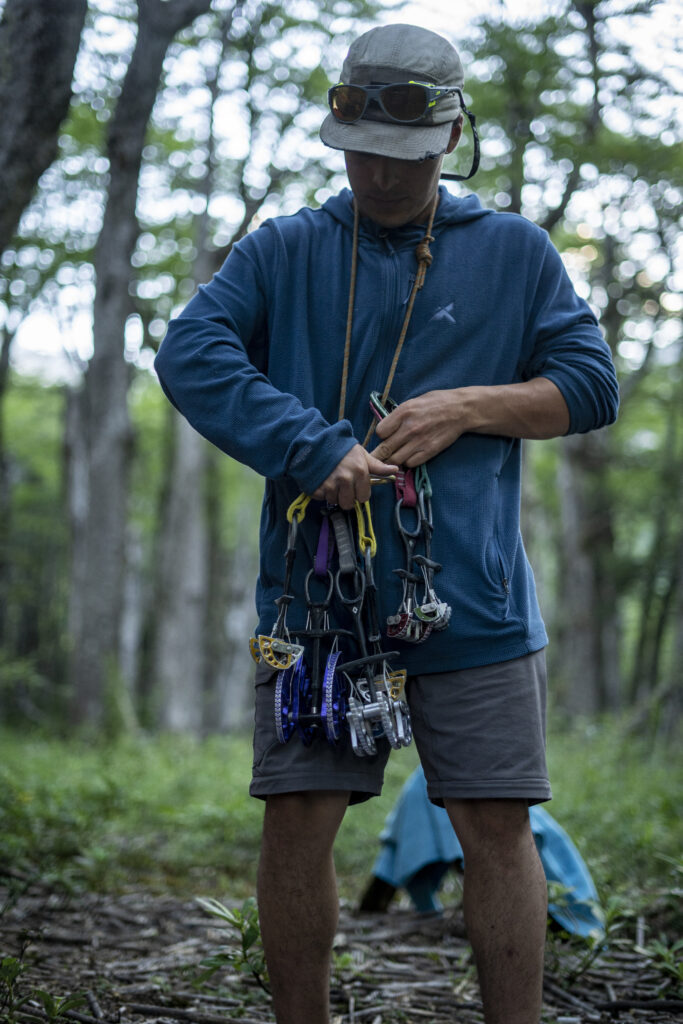
- 2 x 60m ropes
- 12 quickdraws
- 6 runners
- Single rack from #.1 to #4
- 1 set of nuts
Key Questions
- What rack do I need to bring?
- How long and how many ropes do I bring?
Wall Exposure
Know the wall's orientation — north, south, east, or west — which determines when it gets sun or shade depending on the time of year. Combined with the weather forecast, this tells you how to dress and whether conditions are suitable.
Key Questions
- What is the wall's exposure?
- What are the sun and shade hours?
- What layers should I bring based on conditions?
Descent
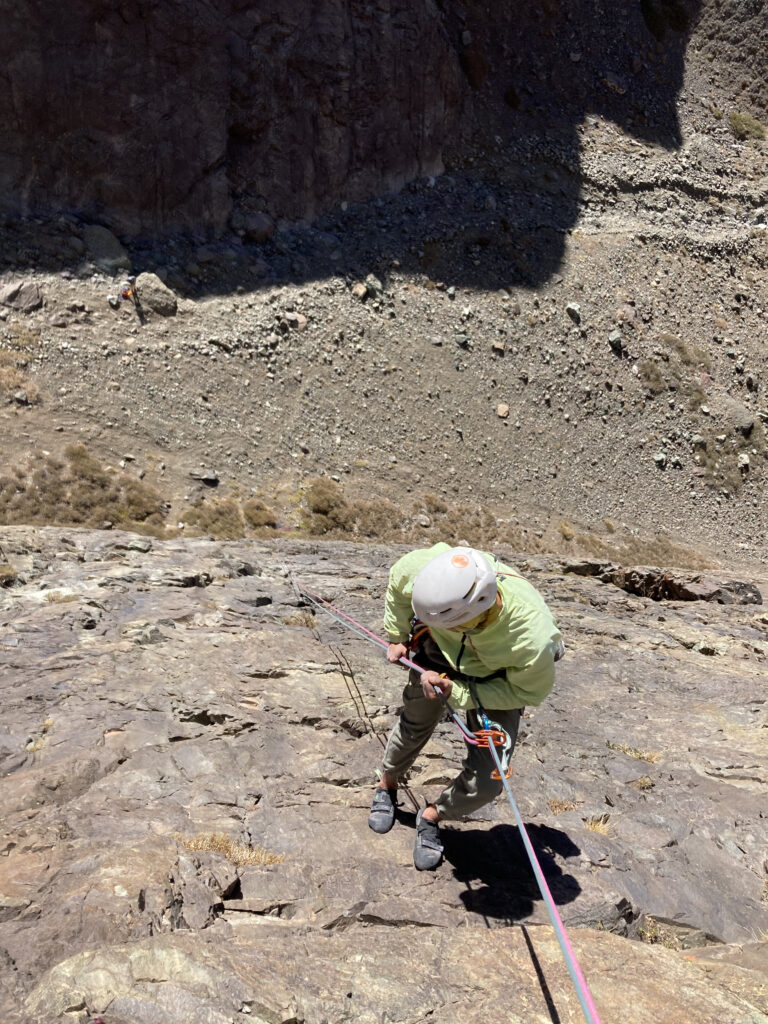
First identify whether the route rappels, walks off, or has both options. If rappelling, determine whether you need 2 ropes (for long rappels) or can descend with 1. Some routes rappel a completely different line — for example, 'El Camino' at Pared de Jabbah is a traverse with a separate rappel line. These details sound obvious but missing them could put you in a situation requiring rescue or self-rescue.
Key questions:
- Does the route rappel or walk off?
- Is the rappel line the same as the climbing line?
- How long are the rappels?
- Do I need 1 or 2 ropes for the rappels?
Safety
Have route information on hand: Download the topo, photos, or route info to your phone and keep it charged. You can also carry a hand-drawn sketch with key information.
Climb with competent partners: Make sure to climb with partners who have the experience and knowledge to handle a multi-pitch safely. Shared responsibility contributes to the team's safety — everyone needs the skills for the activity.
Phone coverage: Know the signal coverage in the area. In an emergency, communication can be vital. Have a contingency plan for signal loss, or carry a satellite messaging device like a Garmin inReach.
Key Questions
- Do I have the topos downloaded?
- Will there be signal on the route or at any point?
- Does my team have the knowledge and experience needed for this route?
Food, Water, and Clothing
A multi-pitch is different from single-pitch climbing, and your food, water, and clothing should reflect that. You'll spend a large part of the day on the wall — choose carefully what goes up with you and what stays behind.
Some tips:
- Bring a separate shirt for the approach — that way you'll start climbing in a dry shirt.
- Pack energy bars or snacks in zipper pockets so you don't need to open your pack to eat at anchors.
- Layer efficiently and bring insulation that's light but warm.
- If you're bringing approach shoes onto the wall, clip them to a locking carabiner — if they fall, you'll be forced to rappel or walk off in climbing shoes.
- Carry enough water for you and your partner. Hydration bladders free up pack space as you drink, unlike rigid bottles.
- Protect yourself from both sun and cold — on sunny days, long sleeves and pants are a good idea.
- Save a treat for the summit!
Logistics
Once you have all this information, you can build your itinerary and logistics for the day — a solid plan for a safe and efficient climb.
Apply everything described above and make your own plan according to your objectives, level, and needs.
We hope this information helps contribute to safer climbing. We encourage all climbers to get trained and carefully plan their ascents!
Do You Plan Your Multi-Pitches?
In our multi-pitch courses we teach this and much more! Check out our courses. https://andestopacific.cl/index.php/cursos/curso-de-multilargos/
 English
  Español