
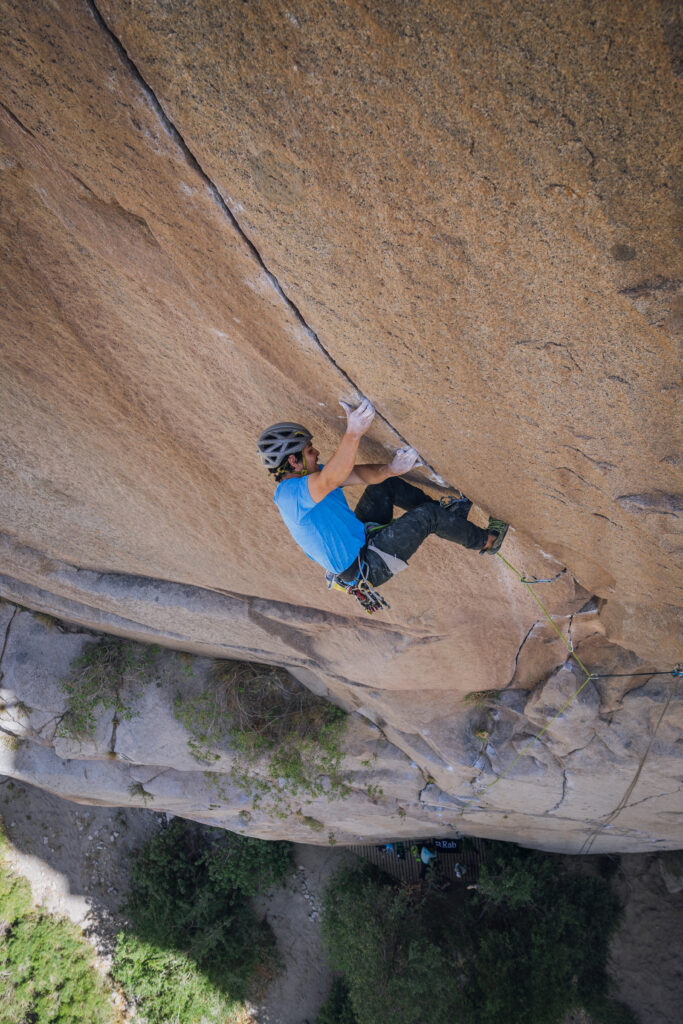
In this article we'll look at one of the most essential pieces of gear in traditional climbing: spring-loaded camming devices, also known as cams. These mobile protection devices are fundamental for protecting cracks. Let's see what they're all about!
What Are Cams?
Cams are mobile protection devices used in traditional climbing. Unlike bolts in sport climbing, which are fixed, cams are placed in cracks and fissures to create mobile anchors that protect the climber in a fall — so knowing how to place them correctly is essential.
How Do They Work?
These devices consist of a stem, cams, a trigger, and a cable. When load is applied, the cams expand against the rock, creating a secure anchor point. Correct placement is fundamental to ensuring a solid anchor.

Sizes and Opening Ranges
Cams come in different sizes, identified by color and number. For example, Black Diamond Camalots come in sizes #0.1, #0.2, #0.3, #0.4, #0.5, #0.75, and #1. Each size has a specific opening range, making them suitable for different crack widths.
In addition, each cam size has a specific strength rating. For example:
#0.2 holds up to 6 kN of force.
#0.4 holds up to 9 kN of force.
#2 holds up to 14 kN of force.
While these ratings may seem low compared to a bolt (22 kN), if a lead climber falls, it's unlikely to generate more than 6 kN on the last piece (in a moderate sport fall, not extreme scenarios). A well-placed piece that meets certain criteria can hold a fall without issue.
Several brands offer cams, and comparing them you'll find differences in sizes and other aspects. Research and evaluate options to find what best fits your needs and climbing style. Keep learning for responsible, safe climbing.
Cam Brands
Black Diamond:
- A well-known brand with a wide range of cams called Camalots, ranging from size 0.1 to 8.
- Robust and durable design, made with high-quality materials.
- Wide opening range and good grip in parallel cracks.
- Camalots are known for their color-coding system, making it easy to quickly identify the right size.
Black Diamond offers a variety of cams, including the C4, C3, X4, Z4, and C4 Ultralight models.
C4 : One of the most popular and versatile cams. Four-cam design with a semi-rigid stem.

C3: Three-cam devices, ideal for narrower and shallower cracks since the head is narrower than the C4.
- Compact size with a narrow head that fits in tight rock features.
- The stem strikes a great balance between rigidity for placement and flexibility to prevent the piece from walking.
- Sizes range from 000 to .2

X4: The next step up from C3, with an even more flexible stem, covering sizes 0.1 to .75. The head is slightly wider than the C3.

Z4 : Black Diamond's latest cam, designed to combine a flexible stem once placed with a rigid stem during placement via their Rigid Flex technology. The head width returns to C3 dimensions.
- Sizes range from 0 to .75

C4 Ultralight is 30% lighter than the classic C4. Same four-cam design but with a lighter build — Dyneema instead of a steel cable in the stem.

Z4 Offset is a variation of the Z4. Unlike standard Camalots — where all four cams are the same size and curvature range —, the Offset combines two larger and two smaller cams in a single unit.
This creates an asymmetry that allows the device to better adapt to cracks where the sides are not parallel or have a width difference from one edge to the other. The Camalot Offset allows secure placements in irregular or tapered cracks, where a symmetric cam can't generate enough contact. Its asymmetric design balances the load between cams and improves friction, increasing safety on demanding terrain.

Totem
Totem is a specialized cam brand known for precision and performance. Their «Direct loading system» stem design allows each pair of cams to function independently, ensuring exceptional adaptation to crack irregularities and solid protection.
These cams adapt to a variety of crack shapes and provide excellent grip in diverse climbing conditions. Their stem allows optimal load distribution across the cams, resulting in reliable, safe performance.
Totems also offer the flexibility to load just 2 cams in certain situations, making them versatile across different climbing scenarios. Their design prevents cam walking when properly placed, ensuring reliable protection.
The cam head is narrower than other brands, allowing placements in shallower cracks and covering a wide range of climbing terrain.
Another interesting feature: Totems can be used as «offset» cams in wider cracks, further expanding their versatility across different crack types.
To make size identification easy, Totems use a unique color-coding system distinct from other brands, allowing quick selection while climbing.
Compared to BD and WC coding, Totems are available from #.2 to #2.
Below is a reference table with some of their size codings

Wild Country:
Wild Country is a renowned British company founded in 1977 by Mark Vallance. The famous name «Friends» came about when Mark's partners asked if he had his «Friends» in his pack — a code word to keep the revolutionary new device secret.
The British company is a pioneer in cam design, continually innovating and achieving success with their products.
They have 2 models: Friends and Zero:
Friends:
One of the most popular and versatile cams. Four-cam design with a semi-rigid stem.
Same color and numbering as Black Diamond, with very similar sizes. Unlike other brands, Wild Country's built-in sling extends the cam slightly without needing a quickdraw (depending on the situation).

Zero
Wild Country's smallest cams, with a stem that balances rigidity for placement with flexibility to prevent walking. These perform well in small cracks, delicate placements, and horizontal crack protection.
Available in sizes #0.1 to #0.75
The Zero line also includes Offset versions with cams of different sizes, allowing them to adapt to irregular or non-parallel cracks — ideal for protecting cracks with varying widths on more complex terrain.

📚 Want to Learn More?
If you want to go deeper into everything covered here — cam types, safe placements, reading cracks, and strategies for properly protecting a route — join us in our Traditional Climbing Course.
In this course we cover in the field everything you need to climb with judgment, efficiency, and safety: from gear theory and strength ratings to real practice on placements, risk management, and crack progression.
👉 Learn, practice, and progress with Andes to Pacific.
 English
  Español